Privacy-First Multi-Tenant Carrier Integration: Designing GDPR-Compliant Routing That Survives API Reliability Crises

Carrier API uptime fell from 99.66% to 99.46% between Q1 2024 and Q1 2025, resulting in 60% more downtime year-over-year. For teams building privacy-first carrier integration middleware, this reliability crisis creates a unique challenge: how do you maintain GDPR compliance while your systems fight against increasingly unreliable carrier endpoints?
The traditional approach of bolting on privacy controls after building your integration platform no longer works. Privacy by design is now a legal requirement, with organizations required to prove that privacy considerations are baked into every stage of product and service development. When your middleware handles shipments for hundreds of tenants during peak season outages, privacy violations become systemic failures rather than isolated incidents.
The Privacy Engineering Imperative for Carrier Integration
Modern carrier integrations process massive volumes of personal data. Address validation APIs expose customer locations, tracking webhooks contain delivery preferences, and rate shopping requests transmit purchasing patterns. Supply chain companies must have a lawful basis for collecting, storing, and sharing personal data, with customer data collected during logistics operations used strictly for business purposes such as fulfilling contracts or meeting legal obligations.
The privacy engineering trend reflects a fundamental shift. Companies now think about privacy as a primary feature rather than reactive compliance. Noncompliance with GDPR can result in fines of up to €20 million or 4% of global annual revenue, making privacy controls business-critical infrastructure.
Platforms like Cargoson, ShipEngine, and EasyPost face unique privacy challenges in multi-tenant environments. Unlike single-tenant integrations where privacy boundaries align with technical boundaries, multi-tenant systems require fine-grained controls that survive carrier API failures and retry storms.
Why Traditional Carrier Integration Patterns Fail Privacy Requirements
Legacy multi-carrier platforms weren't designed for privacy compliance. Most lack mechanisms for obtaining and documenting user consent, restricting data processing to specified purposes, or ensuring data minimization. When FedEx's API returns rate quotes including dimensional weight data you didn't request, or when UPS webhooks contain tracking events for packages beyond your original query scope, traditional integrations simply pass this excess data downstream.
The parcel transportation industry has unique requirements. Logistics companies are subject to GDPR requiring them to have a lawful reason for collecting, storing, or using customer data, with this data necessary for specific purposes like fulfilling contracts or complying with laws. But carriers need shipping data beyond simply providing transportation service. Address validation requires full postal addresses. Customs clearance needs detailed shipment contents. Tracking systems store delivery preferences.
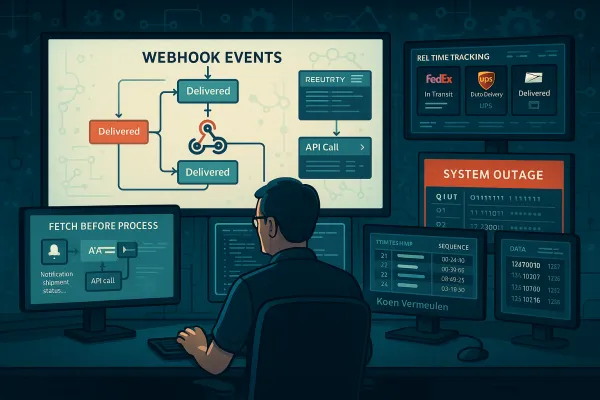
Multi-tenant webhook failures expose the most dangerous privacy violations. When your webhook processing queue gets overwhelmed during a DHL outage, standard retry mechanisms can deliver tracking events to the wrong tenant. Without proper isolation controls, Tenant A receives shipment updates belonging to Tenant B.
Multi-Tenant Isolation Patterns for Shipping Data
A supply chain involves multiple stakeholders, including carriers, warehouses, suppliers, manufacturers, and consumers. Multi-tenancy amplifies privacy risks because databases necessarily store data from multiple tenants together, sacrificing some tenant isolation for operational efficiency.
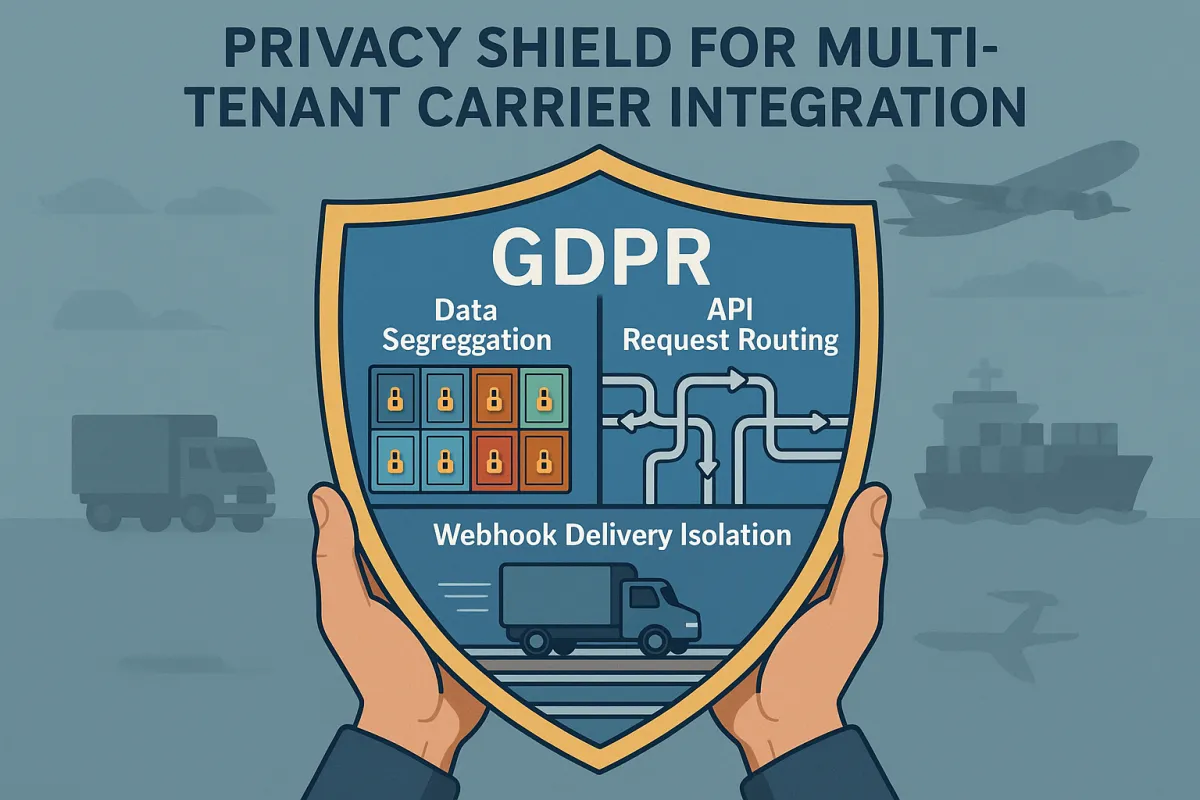
Privacy-first multi-tenant routing requires three isolation layers: data segregation, API request routing, and webhook delivery isolation. Each tenant's shipping data must remain logically separate even when stored in shared infrastructure.
Tenant-aware data routing ensures queries never expose data from multiple tenants simultaneously. Rate caching systems must scope cache keys by tenant ID and data classification. When caching UPS rates for commercial addresses, the cache key structure should include tenant boundaries: `rates:ups:commercial:{tenant_id}:{address_hash}`. This prevents cross-tenant cache pollution where Tenant A's rates appear in Tenant B's responses.
Platforms like nShift, Transporeon, and Cargoson implement different approaches to tenant isolation. Some use dedicated database schemas per tenant, others rely on row-level security policies. The choice affects both privacy compliance and system performance under load.
Row-Level Security for Carrier Data Streams
Row-level security (RLS) provides database-enforced privacy controls that survive application bugs and security vulnerabilities. Each query automatically includes tenant scoping predicates, making cross-tenant data exposure impossible at the database level.
For tracking events, RLS policies ensure that `SELECT * FROM tracking_events WHERE shipment_id = ?` automatically becomes `SELECT * FROM tracking_events WHERE shipment_id = ? AND tenant_id = current_tenant_id()`. The database enforces this restriction even when application code forgets to include tenant boundaries.
Label generation requires special handling because carrier APIs often return more data than requested. When UPS returns dimensional weight measurements you didn't ask for, your RLS policies must decide whether to store this additional data or discard it based on tenant privacy preferences.
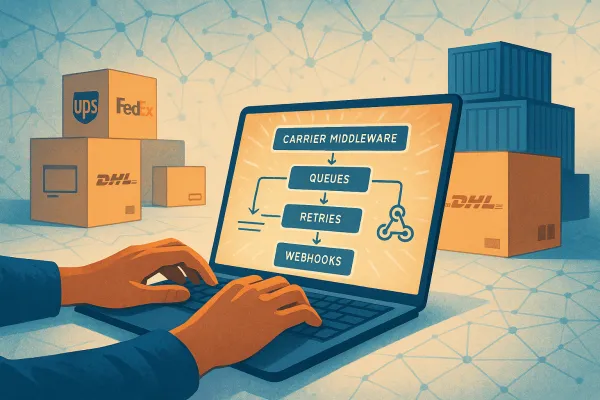
Webhook delivery systems need isolated retry queues per tenant. When PostNL webhooks start failing during peak season, Tenant A's retry attempts shouldn't affect Tenant B's webhook delivery performance. Dead letter queues must maintain tenant boundaries to prevent cross-contamination during error handling.
GDPR-Compliant API Design Patterns
Privacy by design means embedding data protection directly into API architecture. Privacy by design requires that protection of personal data shall be conceived and organised by the company from the very first design stage of information collection and throughout the entire data lifecycle management.
Consent verification middleware sits between your application and carrier APIs. Before making rate requests to DHL, the middleware checks whether you have valid consent to share the destination address for commercial purposes. The consent record includes granular permissions: "address validation: yes, rate shopping: yes, tracking: no".
Data minimization patterns ensure you only request necessary information from carrier APIs. Instead of requesting full address validation from UPS, privacy-aware integrations might only request postal code validation when that's sufficient for rate calculation. This reduces the personal data in your system and limits privacy exposure during outages.
Audit logging architecture must capture privacy-relevant events across all carrier interactions. When your system processes a "right to be forgotten" request, the audit trail needs to prove that all related data has been identified and removed from carrier caches, webhook queues, and backup systems.
Handling Right to Erasure in Distributed Carrier Systems
The "right to be forgotten" grants consumers the right to have their information purged from a company's system, which could be difficult for companies to fully comply when they don't know where the information is. Distributed carrier integrations make this challenge worse because personal data spreads across multiple systems and external APIs.
Tracking data across carriers requires a data lineage system that records where personal information flows. When processing a DHL shipment, your system might store the recipient address in: rate cache, label generation queue, tracking database, webhook retry queue, and audit logs. The erasure process must find and remove data from all these locations.
Webhook queues present special challenges for data deletion. Failed webhook deliveries might contain personal data that persists in retry queues for hours or days. Your erasure implementation needs to scan pending webhook payloads and remove any events related to the deleted customer.
Carrier API responses often include tracking numbers and reference IDs that indirectly identify personal data. When a customer requests deletion, you might need to call carrier APIs to remove tracking preferences associated with their shipments, not just delete local database records.
Resilient Privacy Controls Under API Reliability Crisis
API downtime surged by 60% between Q1 2024 and Q1 2025, translating to duplicate shipments and inventory mismanagement when retry logic fails. For privacy-compliant systems, this reliability crisis creates cascading compliance failures.
Privacy-preserving retry mechanisms must maintain audit continuity even during extended outages. When UPS APIs fail for three hours, your retry system can't simply replay all failed requests when service resumes. Each retry attempt needs fresh consent validation and data minimization checks.
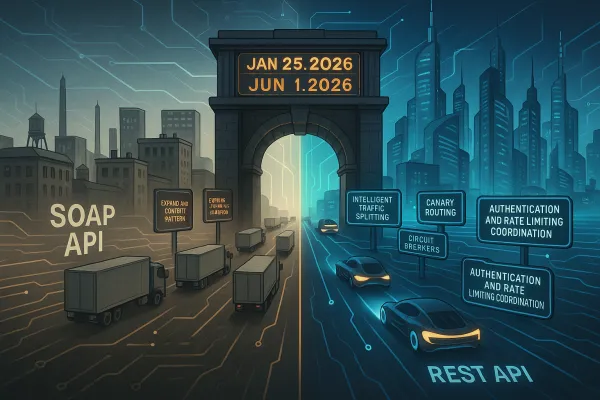
Secure circuit breakers prevent privacy violations during cascade failures. Traditional circuit breakers stop making API calls when failure rates exceed thresholds. Privacy-aware circuit breakers additionally check whether failing requests contain personal data and route them to secure fallback systems rather than generic error handling.
Peak load scenarios reveal hidden privacy vulnerabilities. FedEx rate limits trigger failover to UPS, which then hits its limits and fails over to DHL, creating a "carrier domino effect" that exhausts all available options within 90 seconds. During these cascades, privacy controls often get bypassed in favour of keeping systems operational.
Audit Trail Continuity During Carrier Failures
GDPR compliance requires maintaining detailed audit trails even during endemic carrier API reliability issues that persist for hours. The fines and penalties can be quite severe, with organizations no longer able to put security and privacy of customers' data on the back burner, as non-compliance with data laws is not a viable option for companies to survive.
Audit trail systems must operate independently from carrier API availability. When DHL Express APIs return 500 errors for six hours, your audit logging can't wait for carrier recovery to record privacy-relevant events. Local audit storage with eventual consistency to centralised systems provides resilience against carrier failures.
Dead letter queue patterns need privacy-aware error handling. Failed webhook deliveries containing personal data require different retention policies than failed rate requests. Personal data in dead letter queues must respect the same erasure requirements as operational data.
Monitoring approaches used by platforms like Cargoson, MercuryGate, and others focus on privacy SLO tracking rather than generic uptime metrics. Instead of measuring "API availability", privacy-focused monitoring tracks "consent verification latency" and "audit trail completeness" during outages.
Implementation Architecture and Trade-offs
Privacy-first multi-tenant routing combines dedicated resources for sensitive data with fine-grained access controls for pooled resources. Tenant isolation patterns range from completely separate databases (maximum privacy, highest cost) to shared databases with row-level security (efficiency with compliance risk).
Performance implications multiply under current reliability constraints. Weekly API downtime jumped from 34 minutes to 55 minutes year-over-year, translating to 60% more downtime across more than 400 companies. Privacy controls add latency to every carrier API call through consent verification and data minimization checks.
Cost considerations include compliance infrastructure and audit requirements. Privacy-compliant carrier integration costs 15-20% more than traditional implementations due to additional logging, monitoring, and data isolation requirements. However, GDPR penalties could be as high as €20 million or 4% of the organization's global annual turnover, making this investment mandatory rather than optional.
The reliability crisis forces difficult trade-offs between availability and privacy compliance. During extended carrier outages, you might need to choose between delivering shipments with degraded privacy controls or maintaining strict compliance while shipments wait for carrier recovery.
Privacy-first multi-tenant carrier integration represents the future of logistics middleware. As carrier APIs become less reliable and privacy regulations become stricter, success depends on building systems where privacy controls survive operational chaos. The companies that master this balance will dominate the next decade of logistics infrastructure.